The three pillars
Naam Japo — remember God always. Kirat Karo — earn by honest means. Vand Chhako — share what you earn with those in need.
About us
The word Sikh means “disciple” in Punjabi. Founded five centuries ago by Guru Nanak Dev Ji, Sikhism is the world's fifth-largest religion, with some twenty million followers — a faith of one God, honest work, and radical equality.
Core beliefs
Sikhism teaches belief in One God for all people, of every faith and background. Human life is precious — the opportunity, after countless cycles, to merge with the Divine.
Salvation is not found in renunciation or retreat from the world, but in the life of a householder: raising a family, earning honestly, and serving others. Sikhism firmly rejects blind ritual, superstition, and every hierarchy of caste, gender, or race.
Naam Japo — remember God always. Kirat Karo — earn by honest means. Vand Chhako — share what you earn with those in need.
Articles of faith
Initiated Sikhs carry five articles of faith, each a daily discipline and a visible commitment:
Our story
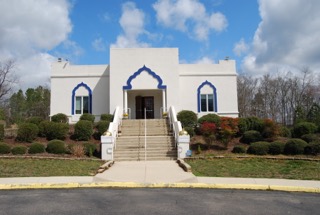
Sikh services in Central Virginia began as monthly gatherings in community centers around Richmond, led by the late Col. Surjit Singh Bawa. In 1984 the community formalized as the Sikh Association of Central Virginia and purchased wooded land in Chesterfield County, just south of the city near Chippenham Parkway.
Construction of the Gurdwara began in 2000 and was completed in May 2002. Bhai Kuljit Singh Ji served as Granthi from 2003, and a residence for the Granthi was built on the property in 2007. Today the Gurdwara is home to a permanent Keertan Jatha and a congregation that gathers every week of the year.
Services convene in community centers under Col. Surjit Singh Bawa's leadership.
The Sikh Association of Central Virginia is formally established; land is purchased in Chesterfield County.
Ground is broken in 2000; the Gurdwara is completed in May 2002.
Serves as the Gurdwara's Granthi for over two decades.
A permanent home for the Granthi is constructed on the grounds.
Bhai Harjinder Singh Ji and Jatha join SACVI as resident Granthis and keertanis.
SACVI Jatha · since February 2025
Our resident Keertan Jatha — “Khanne Wale” — leads weekly keertan, ardaas, and the reading of Hukumnama at every service.


Lead Raagi · Granthi
Born in Khanna, Punjab, and trained at the Pracheen Kala Kendra of Patiala and Chandigarh, he is a master of the dilruba, taus, harmonium, and tabla.
Before joining SACVI he served gurdwaras across Punjab and Chhattisgarh, toured Canada four times, and taught as a music professor at Sahibzada Jujhar Singh Missionary College, Ropar (2021–2024).

Raagi · Granthi
From Balrampur village near Chamkaur Sahib, he holds a B.A. in Gurmat Sangeet and a Gurmat Diploma from Sahibzada Jujhar Singh Gurmat Missionary College. He performs on the rabab and harmonium.
He has served in keertan and granthi roles at gurdwaras across Punjab and Himachal Pradesh since 2017.
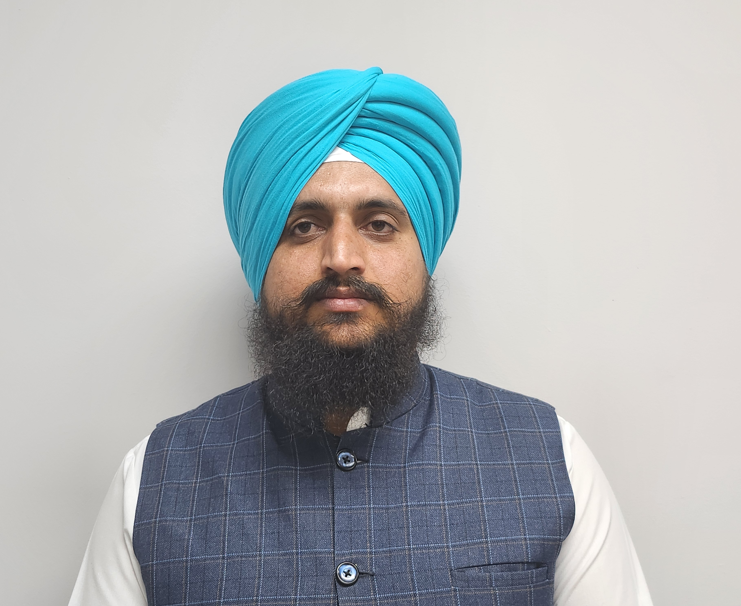
Tabla · Keertan
Born in Chamkaur Sahib, Punjab, he received his gurmat education at Bhai Gurdaas Gurmat Missionary College, Ludhiana, with tabla and harmonium training at Pracheen Kala Kendra, Chandigarh.
He served on tabla at Shahbad Markanda, Haryana, and for over a decade at Gurdwara Beerd Guru Jand Sahib before joining SACVI.
Leadership
SACVI is governed by its Board of Trustees and an elected Executive Committee, supported by dedicated groups like the Interior Decoration Committee and the Langar Committee. Every role is seva — voluntary service to the community.